Your air conditioner turns on, cool air begins flowing through the house, and suddenly you notice it—a stale or musty odor coming from the vents. A few minutes later, the smell may seem less noticeable. Then the next time the system starts, it returns.
In Central Florida, where air-conditioning systems operate for much of the year and humidity is a constant concern, recurring HVAC odors should not simply be covered up with an air freshener. A musty smell can have several possible causes, including moisture, accumulated debris, dirty HVAC components, or conditions elsewhere in the home. Finding the source is more important than masking the odor.
Interesting Fact: The U.S. Environmental Protection Agency (EPA) recommends keeping indoor relative humidity below 60% and ideally between 30% and 50%, when possible, to help reduce the potential for unwanted biological growth.
External Resource: U.S. EPA – Mold Course, Chapter 2
https://www.epa.gov/mold/mold-course-chapter-2
Why Does the Smell Appear When the A/C Starts?
Timing can provide an important clue.
If you notice an odor primarily when the HVAC system begins operating, air movement may be carrying the smell from somewhere within or near the system.
Your air conditioner pulls household air through return vents. That air passes through HVAC components before being distributed back into rooms through supply ductwork.
If an odor source exists somewhere along that path, moving air may make it more noticeable throughout the house.
That does not automatically mean your air ducts are dirty.
However, it is a reason to investigate.
Start With the HVAC Filter
Before assuming there is a major problem, check something simple: your filter.
Filters collect particles as air moves through the HVAC system. A heavily loaded or neglected filter may contribute to unpleasant conditions and can also restrict airflow.
Replace filters according to the recommendations for your particular HVAC equipment and filter.
Make sure the replacement is properly sized and installed in the correct direction.
If a fresh filter does not change the situation and the odor continues, look for other possible causes.
Dust and Debris Can Accumulate in HVAC Systems
HVAC systems move enormous amounts of air over time.
Along with that air can come ordinary household dust, fibers, pollen, pet-related debris, and other particles.
Some material may accumulate inside ductwork and other HVAC components.
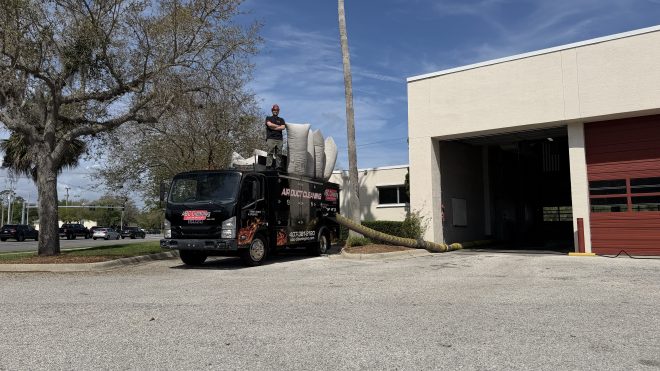
When substantial contamination is present, professional air duct cleaning can physically remove accumulated material from the system.
Internal Resource: ABC Cleaning, Inc. – Air Duct Cleaning
https://abc-cleaninginc.com/orlando-ac-vent-cleaning/
Cleaning should address the system properly rather than simply vacuuming the first few inches behind a register.
Central Florida Humidity Deserves Attention
Moisture is particularly important in our climate.
Central Florida experiences extended periods of warm, humid weather. Your air conditioner helps remove moisture from indoor air, but problems can still occur.
Potential sources of unwanted moisture include:
- Condensation problems
- Drainage issues
- Plumbing leaks
- Roof leaks
- Water intrusion
- Excessive indoor humidity
- Wet building materials
If you see or suspect unwanted moisture around HVAC components, determine why it is there.
The EPA emphasizes that controlling moisture is a key part of controlling indoor biological contaminants.
External Resource: U.S. EPA – Biological Pollutants’ Impact on Indoor Air Quality
https://www.epa.gov/indoor-air-quality-iaq/biological-pollutants-impact-indoor-air-quality
Cleaning alone will not fix an active source of water.
Don’t Ignore Your Condensate Drain
Air-conditioning systems naturally produce condensation while removing moisture from indoor air.
That water needs somewhere to go.
Problems involving the condensate drain or related components can contribute to unwanted moisture around an HVAC system.
Homeowners can visually monitor safely accessible areas for standing water, unusual moisture, or signs that drainage is not occurring normally.
Do not dismantle HVAC equipment unless you are qualified to do so.
If you find an active HVAC drainage problem, contact an appropriate HVAC professional to correct it.
Is It Mold or Mildew?
A musty odor does not automatically prove that mold or mildew is present.
Smell alone cannot reliably tell you exactly what is causing the problem.
This distinction matters because homeowners can waste money treating the wrong issue if they immediately assume every musty odor is mold.
Instead, look for the source.
Is there visible moisture? Has there been a recent leak? Is the HVAC filter dirty? Is debris present? Did the odor begin after water intrusion?
ABC Cleaning, Inc. provides professional mold and mildew preventative treatment for HVAC systems when appropriate.
Internal Resource: ABC Cleaning, Inc. – Mold & Mildew Preventative Treatment
https://abc-cleaninginc.com/mold-mildew-preventative-treatment/
Preventative treatment should not be viewed as a substitute for fixing leaks or other active moisture problems.
What About Air Duct Disinfecting?
Depending on the condition of the HVAC system, homeowners may also discuss air duct disinfecting after appropriate cleaning.
Cleaning and disinfecting perform different jobs.
Cleaning physically removes accumulated contaminants. Disinfecting involves applying an appropriate product as an additional treatment.
ABC Cleaning provides professional air duct disinfecting for Central Florida HVAC systems when appropriate.
Internal Resource: ABC Cleaning, Inc. – Air Duct Disinfecting
https://abc-cleaninginc.com/air-duct-disinfecting/
A professional evaluation can help determine whether cleaning, disinfecting, preventative treatment, or another course of action makes sense.
Don’t Spray Household Products Into Your Vents
A musty smell can make it tempting to grab a can of disinfectant or deodorizer and spray it directly into an air vent.
Don’t.
Household products should not automatically be assumed safe or appropriate for use inside HVAC systems.
Introducing the wrong product into ductwork can expose HVAC materials to chemicals that were never intended for that application.
It can also mask the odor temporarily without addressing the cause.
The National Air Duct Cleaners Association (NADCA) provides homeowner guidance on proper HVAC system cleaning and why specialized methods and equipment are important.
External Resource: National Air Duct Cleaners Association – Homeowners
https://nadca.com/homeowners
Could the Odor Be Coming From Somewhere Else?
Yes.
Because an HVAC system moves air throughout the house, an odor originating outside the ductwork can sometimes seem like it is coming from the vents.
Possible household sources include damp carpeting, wet building materials, laundry areas, plumbing problems, stored items, or other moisture-damaged materials.
Try to determine whether the odor occurs only when the HVAC system operates or remains present even when the system is off.
That information can help narrow down possible sources.
When Should You Take Action?
A brief, unusual smell does not always indicate a serious HVAC problem.
Persistent or recurring odors are different.
Consider professional evaluation when:
- A musty smell returns every time the A/C operates
- You see substantial debris inside accessible ductwork
- Water is present near HVAC components
- You recently experienced a leak or water intrusion
- Visible contamination is present
- The HVAC system has not been evaluated in many years
- The odor is becoming stronger instead of disappearing
If you smell burning, electrical odors, or another potentially dangerous smell, shut the system down when appropriate and contact a qualified professional immediately.
Frequently Asked Questions
Does a musty A/C smell mean I have mold?
Not necessarily. A musty odor can have several causes. Determine the source instead of assuming mold is responsible.
Can dirty air ducts smell?
Accumulated contaminants within HVAC components may contribute to odors under some conditions. Professional evaluation can determine whether cleaning is warranted.
Will air duct cleaning eliminate every HVAC odor?
No. Cleaning can remove accumulated contamination, but it cannot repair leaks, drainage problems, damaged equipment, or other odor sources.
Can I spray air freshener into my vents?
Avoid introducing household sprays or chemicals into HVAC ductwork unless the product is specifically intended and approved for that use.
Why is humidity important in Central Florida?
High humidity and unwanted moisture can create conditions that contribute to indoor air quality concerns. Controlling moisture and repairing leaks are important parts of home maintenance.
Don’t Just Cover Up That Musty Smell
A recurring musty odor from your air vents is your home’s way of telling you something deserves attention. The source may be relatively simple, or it may involve accumulated HVAC contamination or unwanted moisture. Either way, spraying fragrance into the vents is not the solution. Identify the cause, correct moisture problems, maintain your HVAC system, and professionally clean contaminated components when appropriate.
ABC Cleaning, Inc. has been family-owned and operated since 1992, providing professional air duct cleaning, air duct disinfecting, mold and mildew preventative treatment, and related services throughout Orlando and surrounding Central Florida communities. If a musty smell keeps returning when your air conditioner turns on, contact ABC Cleaning, Inc. today for a free estimate or call (407) 381-2120. Let our experienced team help you determine whether your HVAC system needs professional attention.