A fireplace can smell like smoke even when it isn’t being used because of leftover creosote deposits, humid weather, downdrafts, moisture inside the chimney, or restricted airflow. Identifying the underlying cause is important because the solution depends on what’s creating the odor.
Why Does My Fireplace Smell Like Smoke?
The first cool evening of the season finally arrives.
You walk into the living room, open the fireplace damper, and almost immediately notice an unpleasant smoky smell.
No fire has been burning.
The fireplace hasn’t been used for months.
So why does it smell like smoke?
It’s one of the most common chimney questions we hear from homeowners throughout Central Florida every year as temperatures begin to cool.
The good news is that a smoky odor doesn’t automatically mean your chimney is unsafe.
The better news is that many odor problems have identifiable causes.
The key is determining what is creating the smell before deciding how to address it.
After helping Central Florida homeowners since 1992, we’ve found that the smell itself is often only a symptom.
The real issue could involve creosote, moisture, airflow, or something else entirely.
Understanding the difference helps homeowners make better maintenance decisions while avoiding unnecessary worry.
Smoke Odors Often Build Up Gradually
One thing that surprises many homeowners is that smoke odors don’t always appear immediately after using the fireplace.
Instead, they often become more noticeable during long periods when the fireplace sits unused.
Florida’s warm temperatures and high humidity can make odors trapped inside the chimney more noticeable, especially during late summer and early fall.
That’s one reason many homeowners first notice the smell just before fireplace season begins.
Common Cause #1: Creosote Buildup
Every wood-burning fire leaves behind creosote.
Creosote is a natural byproduct of burning wood that gradually accumulates inside the chimney flue.
Even if the fireplace isn’t being used, those deposits can continue producing odors, particularly when humidity levels increase.
In Central Florida, where moisture remains high for much of the year, creosote odors can become surprisingly noticeable.
One of the reasons annual chimney inspections are recommended is to evaluate the amount of creosote present and determine whether professional chimney cleaning is appropriate.
Common Cause #2: Humidity
Humidity affects more than just comfort.
It also affects odors.
Moist air can amplify smells trapped inside masonry, creosote deposits, and other chimney surfaces.
Many homeowners tell us:
“The fireplace only smells during the summer.”
That’s actually a helpful clue.
Seasonal humidity often plays a role in making existing odors more noticeable.
Common Cause #3: Downdrafts
A chimney is designed to carry smoke upward.
However, weather conditions sometimes create the opposite effect.
Changes in air pressure, wind direction, or temperature differences can allow air to travel back down the chimney, carrying fireplace odors into the home.
This is commonly called a downdraft.
While occasional downdrafts can be normal, persistent odor problems deserve further evaluation.
Common Cause #4: Moisture Inside the Chimney
Water and chimneys rarely work well together.
Rain entering through a damaged chimney cap, deteriorated crown, or other openings can combine with soot or creosote to create unpleasant odors.
Moisture can also contribute to masonry deterioration over time.
This is one reason chimney caps play such an important role in protecting the chimney system.
What We’ve Learned Over the Years
One thing we’ve noticed after inspecting chimneys throughout the Orlando area for more than three decades is that homeowners often assume the odor itself is the problem.
In reality, the odor is usually pointing toward something else.
Sometimes it’s simply accumulated creosote.
Other times, it’s a damaged chimney cap allowing rainwater inside.
Occasionally, it’s a downdraft issue.
The important point is that eliminating the smell begins with identifying its source—not masking it with scented products or air fresheners.
Could Something Be Blocking the Chimney?
Not every fireplace odor comes from creosote or humidity.
Sometimes the chimney simply isn’t venting the way it should.
Over the years, we’ve found that one of the more common surprises for homeowners is discovering that something has partially blocked the chimney during the months it wasn’t being used.
Possible obstructions include:
- Leaves and small branches
- Bird nests
- Animal nesting materials
- Debris blown in during storms
Even a partial obstruction can affect airflow and contribute to unusual odors inside the home.
What Can You Check Yourself?
There are a few simple observations homeowners can safely make before scheduling service.
Does the Odor Only Appear During Certain Weather?
If the smell is strongest during humid weather or after heavy rain, moisture may be contributing to the problem.
If it seems to occur only on windy days, a downdraft may be involved.
Noticing these patterns can provide helpful information during a professional inspection.
Look at the Fireplace Opening
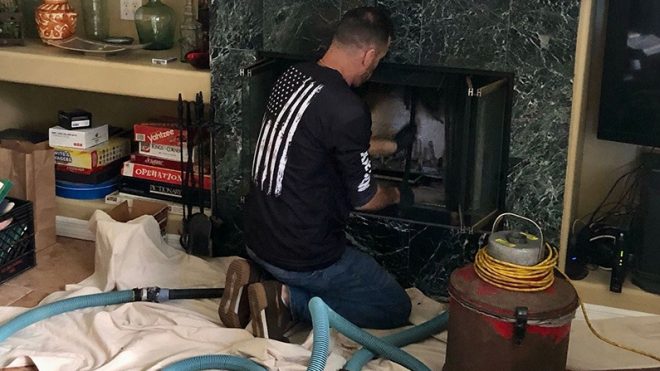
Without climbing onto the roof or attempting to inspect the flue yourself, take a quick look inside the firebox.
Do you notice:
- Excessive soot?
- Pieces of masonry?
- Leaves or debris?
- Signs that animals may have entered?
If anything appears unusual, it’s worth having the chimney evaluated before using the fireplace.
Pay Attention After Heavy Storms
Central Florida experiences strong thunderstorms throughout the summer and during hurricane season.
After significant storms, it’s a good idea to perform a visual inspection of your chimney from the ground.
Look for obvious signs of damage such as:
- A missing chimney cap
- Leaning or damaged chimney components
- Loose bricks
- Visible cracks in masonry
If you notice changes, schedule an inspection before lighting your next fire.
What Should You Avoid?
When homeowners notice a smoky odor, it’s natural to look for a quick fix.
However, a few common approaches usually don’t solve the underlying problem.
Avoid:
- Covering the odor with air fresheners.
- Burning scented logs to “clean” the chimney.
- Using the fireplace without understanding why the odor developed.
- Attempting to inspect the chimney from the roof without proper training and safety equipment.
The goal isn’t simply to hide the smell—it’s to determine what’s causing it.
When Is It Time for a Professional Inspection?
If the odor persists or returns year after year, it’s time to have the chimney professionally inspected.
An inspection is especially worthwhile if:
- You haven’t had the chimney inspected in several years.
- The fireplace hasn’t been used in a long time.
- You recently purchased the home.
- You suspect water may be entering the chimney.
- You notice visible damage or recurring odors.
A professional inspection can identify whether the issue involves creosote buildup, moisture, airflow, structural concerns, or another maintenance issue.
What We’ve Learned Since 1992
One of the most valuable lessons we’ve learned after serving Central Florida homeowners for more than three decades is that fireplaces often communicate through subtle changes.
A new odor.
A small water stain.
A loose brick.
A little more smoke than usual.
Individually, those changes may not seem significant.
Together, they often tell us it’s time to take a closer look.
Homeowners who pay attention to those early signs usually have more options because smaller maintenance issues are often easier to address than larger repairs.
Key Takeaways
- A smoky fireplace odor can be caused by creosote, humidity, moisture, downdrafts, or chimney obstructions.
- Florida’s humid climate often makes existing chimney odors more noticeable.
- Homeowners can safely observe patterns and perform simple visual checks from inside the home and from ground level.
- Avoid masking persistent odors without identifying the underlying cause.
- A professional chimney inspection can help determine why the odor is occurring and whether maintenance or repairs are needed.
Frequently Asked Questions
Is it normal for my fireplace to smell during the summer?
It can be. Florida’s humidity often makes odors from creosote or moisture inside the chimney more noticeable during warm weather.
Can rain cause my fireplace to smell?
Yes. If water enters the chimney because of a damaged chimney cap, crown, flashing, or other issue, moisture can contribute to unpleasant odors.
Should I use my fireplace if it smells like smoke?
A smoky odor doesn’t automatically mean the fireplace is unsafe, but if the smell is persistent or you’ve noticed other changes, it’s a good idea to have the chimney inspected before using it.
Can a chimney cap help reduce odors?
A properly installed chimney cap helps keep rain, debris, and animals out of the chimney. While it isn’t a cure for every odor, it can help prevent some of the conditions that contribute to odor problems.
About ABC Cleaning, Inc.
Since 1992, ABC Cleaning, Inc. has provided professional chimney cleaning, chimney inspections, chimney repairs, chimney caps, air duct cleaning, dryer vent cleaning, commercial air duct cleaning, apartment and condominium vent cleaning, and indoor air quality services throughout the Orlando metropolitan area.
Over the years, we’ve learned that many chimney concerns begin with simple questions like, “Why does my fireplace smell?” Our experienced technicians take the time to inspect your chimney, explain what they find in straightforward language, and recommend only the services your home actually needs.
If you’ve noticed a smoky or musty fireplace odor, consider scheduling a professional chimney inspection before fireplace season begins. Understanding the cause now can help you enjoy your fireplace with greater confidence when cooler weather arrives.
Internal Resources
Continue learning about chimney care:
- Chimney Cleaning
https://abc-cleaninginc.com/chimney-cleaning/ - Chimney Repair
https://abc-cleaninginc.com/chimney-repair/ - ABC Cleaning, Inc. Blog
https://abc-cleaninginc.com/blog/
External Resources
Helpful information from trusted organizations:
- Chimney Safety Institute of America (CSIA)
https://www.csia.org - National Fire Protection Association (NFPA)
https://www.nfpa.org - U.S. Environmental Protection Agency – Indoor Air Quality
https://www.epa.gov/indoor-air-quality-iaq